In many African cultures, language carries layers of meaning. Words are not only descriptive — they hold memory, philosophy, and lived wisdom.
In the Shona language, several words connected to birth and caregiving share the same root. When placed together, they reveal something profound about how our ancestors understood the early relationship between mother and child.
Chibereko: The Womb
Chibereko is the womb — the place where life begins. It is where a baby grows surrounded by warmth, movement, rhythm, and nourishment. The womb is not silent or still. Babies feel the sway of walking, the rise and fall of breathing, and the sounds of voices and laughter around them.
Long before modern neuroscience described these experiences, our ancestors already understood that the womb was the baby's first environment of connection.
Kubereka: To Bring Forth Life
Kubereka means to give birth. Birth is the moment when a baby moves from the protected environment of the womb into the wider world.
But in many African cultures, birth was never understood as a sudden separation between mother and child. Instead, it was simply the next stage in a continuing relationship.
Zimbabwean Mbereko: Carrying the Child
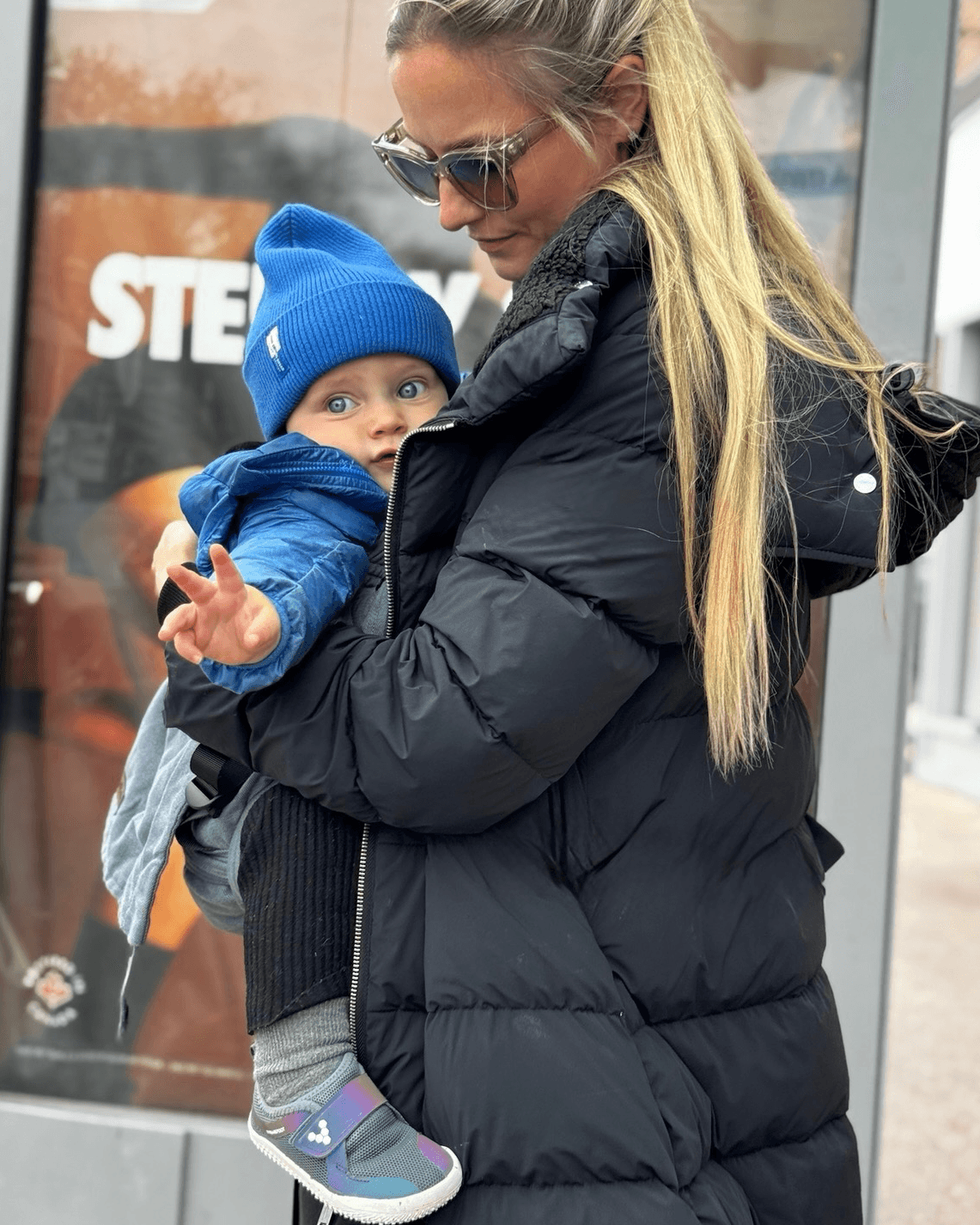
Mbereko is the cloth used to carry a baby on the back. The word shares the same linguistic root as chibereko, the womb. This connection reflects a deep cultural understanding: the relationship that began in the womb does not end at birth.
The Mbereko extends the closeness of the womb. When a baby is wrapped onto the caregiver's back, they continue to feel movement, warmth, and the rhythm of daily life. They remain connected to the caregiver's body while slowly becoming familiar with the world around them.
In many ways, the Mbereko becomes the baby's first home outside the womb.
This Language Reflects the Depth of Life
Even expressions in everyday speech reflect this understanding. In Shona, when someone struggles with infertility, people may say:
“Mbereko yakaramba.”
The womb has refused.
Here the word mbereko refers to the womb itself. This shows how closely the ideas of womb, birth, and carrying a child are connected in the language. The words remind us that these experiences were never seen as separate events. They are part of the same continuum of life and caregiving.
Life begins in warmth, rhythm, and connection.
The child enters the world.
Closeness continues as the baby grows.
The child grows within community.
Our ancestors understood something modern science is only beginning to describe: babies thrive when their early experiences remain rooted in connection, rhythm, and relationship.
This wisdom continues today through the philosophy of Hunhu/Ubuntu — the understanding that a person becomes fully human through relationship with others.
A child does not grow alone. A child grows within the arms of a community.