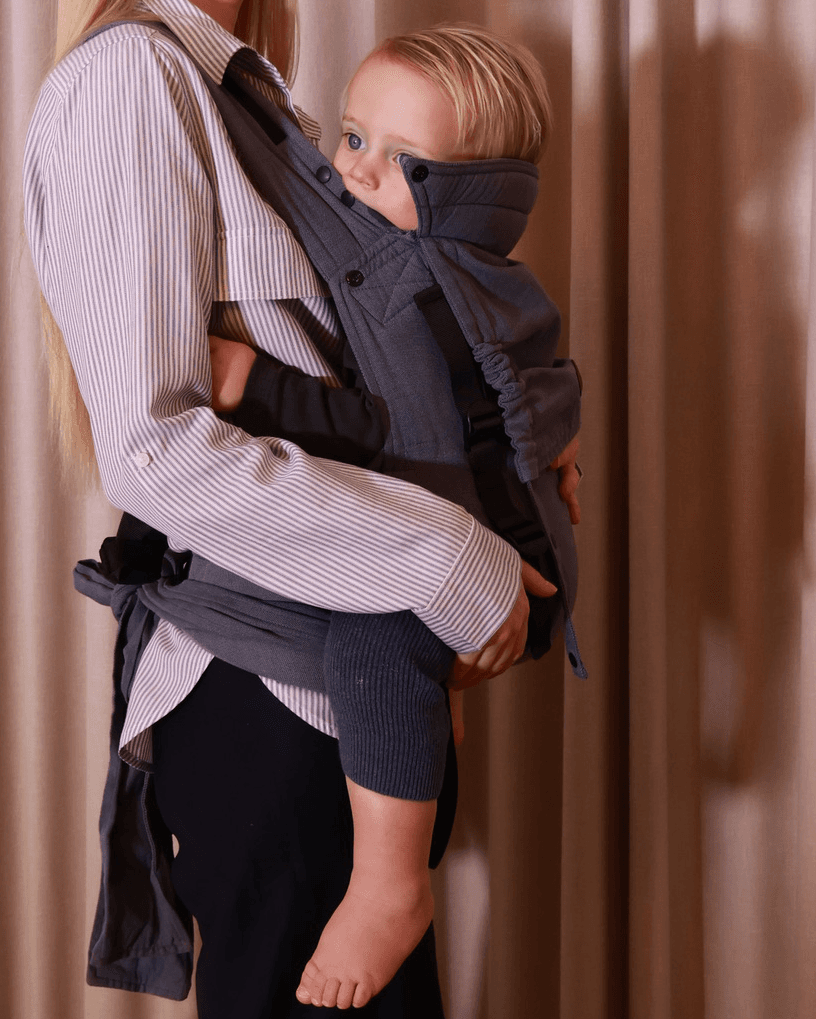
In Zimbabwe, a baby carrier is called Mbereko. But there is no single English word that fully captures what Mbereko means.
To speak of Mbereko is to speak of more than a cloth. More than a carrier. More than a method. It is to speak of an African understanding of how life is held.
In ChiShona, the word Mbereko carries a deeper meaning than simply a baby carrier. Mbereko describes the experience of holding life — first in the womb, and then afterwards on the caregiver's body. While English often reduces the womb to a biological organ, Shona language preserves an important distinction. Chibereko refers to the physical womb — the organ. Mbereko, however, refers to the relational environment that holds and sustains life, both inside the womb and outside of it.
It names the living space in which life is:
“Contained. Nourished. Protected. Carried in rhythm. Held in uninterrupted connection.”
Mbereko is therefore relational, not anatomical. It describes the capacity to hold life, not only the organ that makes pregnancy possible.
When Language Carries Wisdom
This understanding appears even in everyday Shona expressions. When infertility is spoken of, people may sometimes say:
“Mbereko yakaramba.”
The womb has refused.
This phrase does not refer only to the uterus as an organ. It reflects something deeper — the absence of the capacity to carry and sustain life. If mbereko referred only to an organ, it could not "refuse." The phrase reveals that mbereko names a function. The function of holding life.
A Continuum of Care
In Shona cultural understanding, three related ideas form a natural progression that helps us see why babywearing is so important.
The process through which life is brought into the world.
The relational space that contains, protects, and sustains life.
The way this holding environment continues after birth.
Birth does not break the relationship. It simply changes the environment in which life is held.
Why Mbereko Matters
For generations, babies in many African communities were carried on the caregiver's back using a cloth wrap known as the Mbereko. This practice allowed babies to remain close to the caregiver's body — feeling movement, warmth, rhythm, and presence.
The baby who had once been held in the womb was now held against the body. In this way, babywearing continued the environment the child had already known. The Mbereko became the baby's first home outside the womb.
Babywearing was never seen as a parenting technique or a trend. It was simply the natural continuation of relationship.
Beyond Biology
In Zimbabwean culture, mbereko does not disappear after birth. Nor is it limited only to biological pregnancy. Women who do not carry pregnancy often continue the work of mbereko through communal caregiving — nurturing, holding, soothing, and regulating children within the village.
Grandmothers. Aunties. Sisters. Neighbours. Each pair of hands continues the work of mbereko — holding life close, responding to the needs of the child, and guiding them gently into the world.
This reflects a deeper cultural truth: Mbereko is not owned by biology. It is expressed through relationship.
A Continuation of Holding
For a mother, the shift from womb to world can feel sudden. For months, your baby lived inside your body — held within your breath, your movement, your rhythms. Every step you took, every laugh, every quiet moment became part of their first understanding of life.
And then one day, they are placed into your arms. But the relationship was never meant to stop there. The Mbereko reminds us that the holding simply continues.
The baby who once rested beneath your heart now rests against your body. They still feel your warmth. They still hear your voice. They still move through the world carried by the rhythms of your body.
In many ways, the Mbereko becomes a gentle bridge between two worlds — the womb and the village. It allows the child to enter the world slowly, still surrounded by the closeness that first taught them what safety feels like.
“Birth was never meant to break the relationship. A child is not born into independence. A child is born into belonging.”